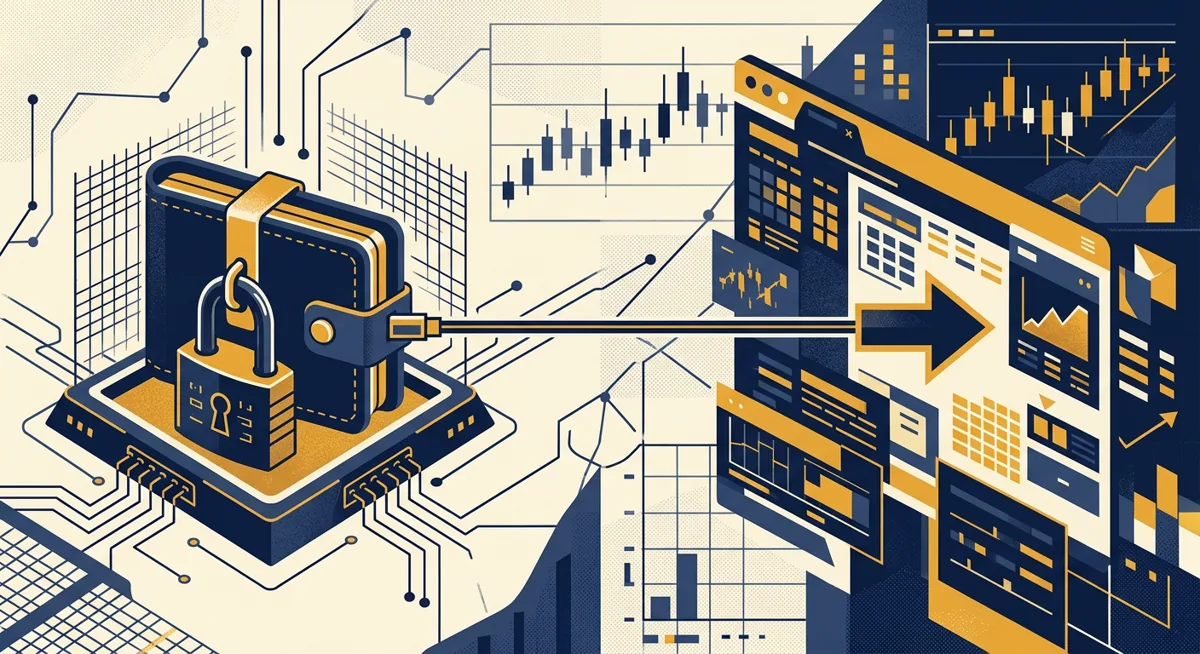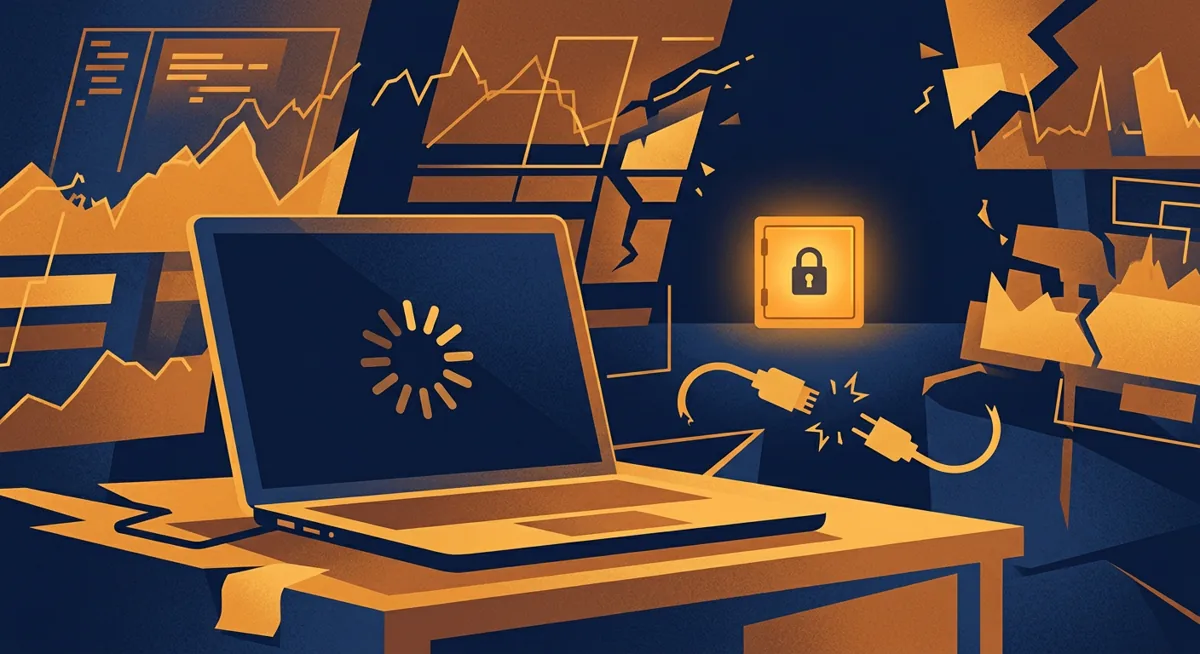
Verdict: an exchange going down rattles traders more than it should, because custody and trading are two different systems that usually fail independently. If you split funds between Coinbase and Binance, or you're deciding whether to, read on for what actually breaks during an outage and what doesn't.
In short
- Exchange outages usually hit the trading engine or card/on-ramp processing, not cold storage custody of user funds.
- Coinbase's daily withdrawal cap sits at €100,000 per day, which matters if you're trying to move funds off-platform during or right after downtime.
- Binance's base spot fees are 0.100% maker and 0.100% taker, with instant card buys running up to around up to around 2% — a cost gap worth knowing before you switch platforms mid-incident.
- Binance is not usable at all in a long list of jurisdictions, including American Samoa, Canada, Cuba, Cyprus, Guam, Indonesia, India, Iran, Japan, North Korea, Northern Mariana Islands, Philippines, Puerto Rico, Russia, Singapore, Thailand, Ukraine (Crimea Region incl. Donetsk, Luhansk, Zaporizhzhia and Kherson as well as the Crimea Peninsula), United States Minor Outlying Islands, USA, Vietnam, Virgin Islands (U.S.), Malaysia, Netherlands, United Arab Emirates, United Kingdom., so 'just switch exchanges' isn't an option for everyone.
- The practical fix for outage risk is procedural — smaller standing orders, status-page checks, and not treating any single exchange as your only access point.
Key facts
| Coinbase | Binance | |
|---|---|---|
| Fees | — | Spot maker fee (base tier): 0.100% Spot taker fee (base tier): 0.100% Instant buy / card purchase fee: up to around 2% |
| Limits | Daily withdrawal limit: €100,000 per day | Minimum deposit: Minimum deposit amounts vary by currency and method |
| Deposit methods | — | — |
| Country availability | — | Restricted countries: American Samoa, Canada, Cuba, Cyprus, Guam, Indonesia, India, Iran, Japan, North Korea, Northern Mariana Islands, Philippines, Puerto Rico, Russia, Singapore, Thailand, Ukraine (Crimea Region incl. Donetsk, Luhansk, Zaporizhzhia and Kherson as well as the Crimea Peninsula), United States Minor Outlying Islands, USA, Vietnam, Virgin Islands (U.S.), Malaysia, Netherlands, United Arab Emirates, United Kingdom. |
What changed: why 'coinbase down' keeps trending
Search interest in "coinbase down" spikes in predictable patterns: a volatile price move, a lot of simultaneous logins, and the trading engine or app backend falls over under load. This isn't unique to Coinbase. Every centralized exchange runs a matching engine, a wallet/custody layer, a card-processing pipeline, and a customer-facing app as separate systems. When people report an exchange as "down," they're usually describing one of these failing, not all of them.
The distinction matters because custody generally sits apart from the trading stack. Cold storage doesn't care whether the website is returning errors. What breaks first, in order of frequency reported by users, tends to be:
- The mobile app or web trading interface (orders won't place or won't cancel)
- Card and bank on-ramp processing (deposits queue or fail)
- API access for algorithmic or high-frequency traders
- Withdrawal processing, which is the one that actually worries people, since it touches funds leaving the platform
Coinbase has had public incidents where the first two categories were affected during periods of high transaction volume. Binance has had comparable incidents on its matching engine during sharp market moves. Neither company publishes a running tally of downtime minutes that would let anyone build a real uptime percentage, so treat any specific uptime claim you see elsewhere with the same skepticism I'd apply to a fee schedule with no fine print.
Takeaway: most reported outages are interface or processing failures, not evidence that your holdings are at risk.
Who is affected by a Coinbase or Binance outage
Not everyone experiences an outage the same way. Here's how impact tends to break down by user type.
| User type | Typical impact during an outage | Severity |
|---|---|---|
| Buy-and-hold retail user | Can't check balance or place a trade for a while | Low |
| Active trader with open orders | Orders may not execute at intended price, or won't cancel | Medium to high |
| Card/bank on-ramp buyer | Deposit queues, delayed confirmation, occasional failed charge | Medium |
| API or bot trader | Missed fills, stale price feeds, forced manual intervention | High |
| Someone mid-withdrawal | Withdrawal delayed until systems recover; funds aren't lost, just stuck | Medium |
The group that actually loses money, as opposed to just losing time, is the active trader with resting orders during a fast market. If the matching engine stalls while price is moving, you can end up filled at a worse level once service resumes, or not filled at all when you needed to be. Retail users who aren't trading intraday mostly lose convenience, not value.
Geography adds another layer. Binance's restricted-country list includes American Samoa, Canada, Cuba, Cyprus, Guam, Indonesia, India, Iran, Japan, North Korea, Northern Mariana Islands, Philippines, Puerto Rico, Russia, Singapore, Thailand, Ukraine (Crimea Region incl. Donetsk, Luhansk, Zaporizhzhia and Kherson as well as the Crimea Peninsula), United States Minor Outlying Islands, USA, Vietnam, Virgin Islands (U.S.), Malaysia, Netherlands, United Arab Emirates, United Kingdom. — if you're in one of those places, an outage discussion about Binance is academic, since you weren't able to use it in the first place. That's worth checking before assuming both platforms are interchangeable fallback options for each other.
Takeaway: the more actively you trade, and the more you rely on APIs, the more an outage can cost you — everyone else mostly just waits.
What to do when an exchange goes down
None of this requires panic. It requires a short checklist you follow before and during downtime.
- Check the status page or official social account first. Don't trust a screenshot without a timestamp; check whether the company itself has acknowledged the issue.
- Don't resubmit an order or a card charge repeatedly. Duplicate submissions during an outage are a common source of duplicate charges once systems recover.
- Assume custody is intact until told otherwise. A frozen interface is not the same as frozen funds. Cold storage failures are rare and are usually disclosed explicitly, not inferred from an app error.
- Know your withdrawal limits before you need them. Coinbase's cap is €100,000 per day — if you're planning to move a large balance right after an incident clears, that ceiling determines how many days it takes, not how fast support responds.
- Keep a second on-ramp or exchange account verified in advance. Verification takes time; doing it during an active outage is the worst moment to start.
- For active traders, reduce resting order size ahead of known high-volatility windows (major economic releases, large token unlocks) since that's when matching engines are most likely to strain.
- Log everything if a stuck withdrawal or failed charge costs you money. Timestamps, screenshots, and transaction IDs are what support teams ask for, and what you'd need for a dispute.
Takeaway: the fix for outage anxiety is preparation before the incident, not action during it.
Fee and limit snapshot
A reasonable question during any outage discussion is whether switching platforms is even worth the fee difference. Here's the base-tier comparison.
| Item | Coinbase | Binance |
|---|---|---|
| Daily withdrawal limit | €100,000 per day | Not listed here — varies by account tier |
| Spot maker fee (base tier) | Not listed here | 0.100% |
| Spot taker fee (base tier) | Not listed here | 0.100% |
| Instant/card buy fee | Not listed here | up to around up to around 2% |
| Minimum deposit | Not listed here | varies by currency and method (Minimum deposit amounts vary by currency and method) |
The gap between Binance's base spot fee and its card-purchase fee is the one people forget until they're mid-outage and reach for the fastest deposit method available. Instant card buys cost noticeably more than a standard spot trade — that's true regardless of whether either exchange is having a good day operationally.
Country availability matters more than uptime
Before treating "just use the other exchange" as a backup plan, check availability. Binance is restricted in American Samoa, Canada, Cuba, Cyprus, Guam, Indonesia, India, Iran, Japan, North Korea, Northern Mariana Islands, Philippines, Puerto Rico, Russia, Singapore, Thailand, Ukraine (Crimea Region incl. Donetsk, Luhansk, Zaporizhzhia and Kherson as well as the Crimea Peninsula), United States Minor Outlying Islands, USA, Vietnam, Virgin Islands (U.S.), Malaysia, Netherlands, United Arab Emirates, United Kingdom.. If you're in any of those regions, your real backup plan is a different on-ramp entirely, not a second global exchange.
Takeaway: fee and limit differences are usually a bigger factor in your total cost than which platform had downtime last month.
References
| # | Source | Reliability | Checked |
|---|---|---|---|
| 1 | binance.com — Spot maker fee (base tier) | Official source | 2026-09-16 |
| 2 | binance.com — Instant buy / card purchase fee | Official source | 2026-09-16 |
| 3 | help.coinbase.com — Daily withdrawal limit | Official source | 2026-09-18 |
| 4 | binance.com — Minimum deposit | Official source | 2026-09-16 |
| 5 | binance.com — Restricted countries | Official source | 2026-09-16 |