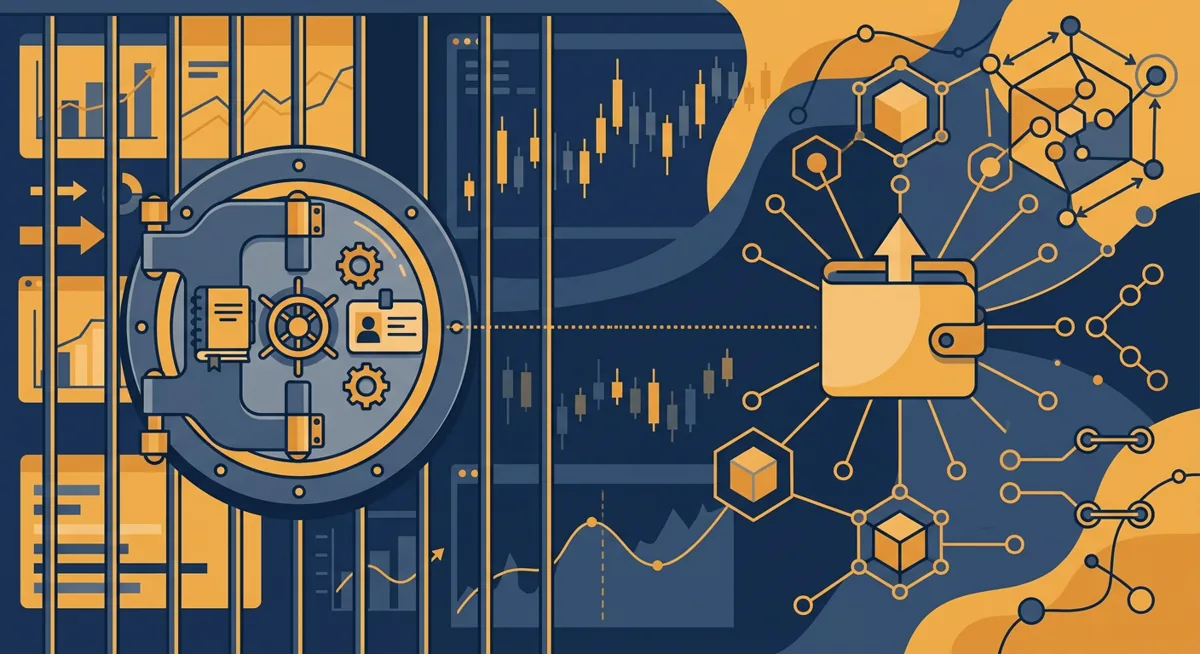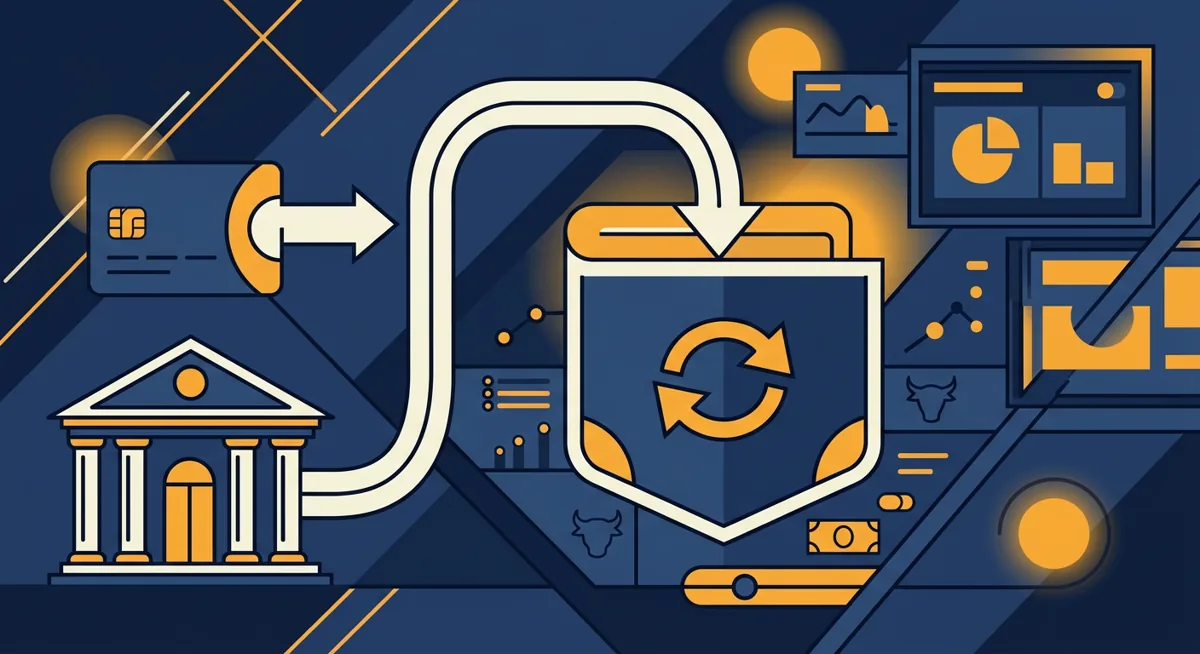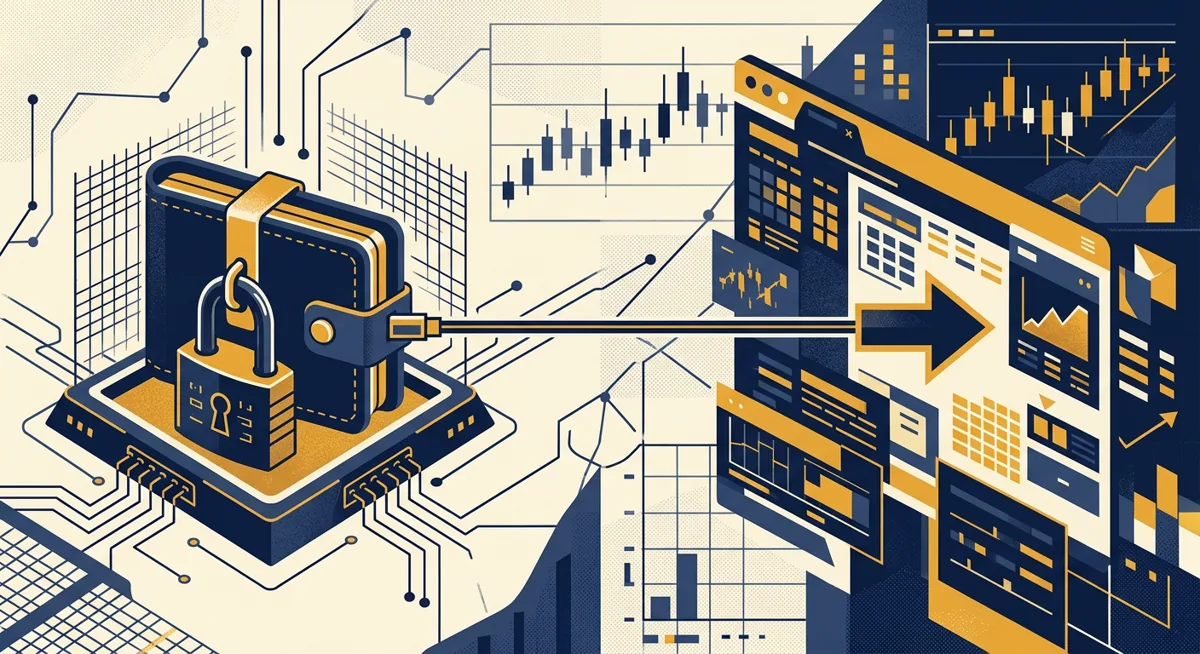
Kraken Wallet is a custodial balance, not a wallet you control, and that single fact decides most of what you can and can't do with it. Read on if you're deciding whether to park funds on Kraken, move money between exchanges, or just want a plain-language read on what 'custody' means before you hit deposit.
In short
- Kraken Wallet holds funds under Kraken's control, not the user's private keys — a standard custodial setup, not self-custody.
- The minimum deposit on Kraken is 1 USD.
- Kraken supports these deposit methods: Bank Transfer (ACH), SEPA (EUR, CAD), Fedwire, SWIFT, Etana Custody Wire Transfer, crypto deposits, phone digital wallet, credit or debit card.
- Kraken blocks account access from a fixed list of countries: Prohibited regions: Afghanistan; Belarus; Crimea, Donetsk, and Luhansk regions of Ukraine; Cuba; Democratic Republic of the Congo; Iran; Iraq; Japan; Libya; North Korea; Russia; Sudan; South Sudan; Syria.
- Fees vary by deposit method — Kraken does not publish one flat number covering every rail.
Key facts
| Kraken | |
|---|---|
| Fees | — |
| Limits | Minimum deposit: 1 USD |
| Deposit methods | Deposit methods: Bank Transfer (ACH), SEPA (EUR, CAD), Fedwire, SWIFT, Etana Custody Wire Transfer, crypto deposits, phone digital wallet, credit or debit card |
| Country availability | Restricted countries: Prohibited regions: Afghanistan; Belarus; Crimea, Donetsk, and Luhansk regions of Ukraine; Cuba; Democratic Republic of the Congo; Iran; Iraq; Japan; Libya; North Korea; Russia; Sudan; South Sudan; Syria |
What you need before you touch Kraken Wallet
What Kraken Wallet actually is
Kraken Wallet is not a hardware device and not a self-custody app. It's the balance sheet entry Kraken keeps for you inside its own exchange. You hold a claim on assets; Kraken holds the private keys. That distinction matters more than the marketing copy suggests, because it means withdrawal freezes, account reviews, and platform outages are risks that sit on top of normal market risk. For a longer comparison of custodial exchanges against non-custodial setups, see Centralized vs Decentralized Exchanges Compared.
Before you fund anything, line up:
- A government-issued ID that matches the country you claim to live in.
- A bank account or card tied to your own name, matching whichever deposit method from Bank Transfer (ACH), SEPA (EUR, CAD), Fedwire, SWIFT, Etana Custody Wire Transfer, crypto deposits, phone digital wallet, credit or debit card you plan to use.
- Confirmation that your country isn't on Kraken's blocked list. Kraken's restricted regions are Prohibited regions: Afghanistan; Belarus; Crimea, Donetsk, and Luhansk regions of Ukraine; Cuba; Democratic Republic of the Congo; Iran; Iraq; Japan; Libya; North Korea; Russia; Sudan; South Sudan; Syria. If you're in one of these, stop here — the account will not clear verification no matter how much paperwork you upload.
- A realistic read on the minimum deposit. Kraken sets that floor at 1 USD; sending less just leaves the transfer stuck, and getting it reversed is a separate headache with its own delays.
- Two-factor authentication set up before you fund, not after. Custodial balances are an obvious target, and Kraken can't undo a withdrawal once it clears the blockchain or bank rail.
One-line takeaway: verification and country eligibility gate everything else — check both before funding anything.
How deposits and withdrawals actually work
Getting money in and out
- Create an account and complete identity verification. Kraken won't release a deposit into a tradable wallet balance until this clears.
- Turn on two-factor authentication. Skip this and you're relying on a password alone to protect a custodial balance.
- Choose a deposit method. Kraken lists Bank Transfer (ACH), SEPA (EUR, CAD), Fedwire, SWIFT, Etana Custody Wire Transfer, crypto deposits, phone digital wallet, credit or debit card as its supported rails. Fiat rails post slower than crypto deposits; card payments post fastest but usually carry the steepest cost per unit deposited.
- Send at least the minimum. Kraken's floor is 1 USD. Anything below that risks sitting unprocessed rather than crediting automatically.
- Confirm the deposit shows in your Kraken Wallet balance before placing any order. Balances update at different speeds depending on the rail — wire transfers lag behind crypto deposits because banks batch settlement, not because Kraken is slow.
- When withdrawing, reverse the method where practical. Withdrawing to a different bank than the one you deposited from often triggers extra review, since Kraken is checking that the destination account actually belongs to you.
- If you're weighing this process against another exchange's flow — say you're also considering buying XRP elsewhere — the deposit-to-trade sequence in How to Buy XRP on Binance: Fees, Limits, KYC follows the same shape: verify, fund, wait, trade.
One-line takeaway: the sequence is always verify, fund, confirm, then trade — skipping a step just delays you later, it doesn't speed anything up.
Fees and limits that apply
What the numbers actually say
Kraken publishes a list of deposit methods rather than a single flat fee, and the cost depends entirely on which rail you pick. Here's what's confirmed:
| Deposit method | Category | What to expect |
|---|---|---|
| Bank Transfer (ACH) | Fiat | Standard bank rail, no crypto conversion step |
| SEPA (EUR, CAD) | Fiat | Regional rail for euro and Canadian dollar transfers |
| Fedwire | Fiat | Domestic wire, typically faster than international wires |
| SWIFT | Fiat | International wire, usually the slowest fiat option |
| Etana Custody Wire Transfer | Fiat | Routed through a third-party custodian rather than direct to Kraken |
| Crypto deposits | Crypto | Network fees apply separately from anything Kraken charges |
| Phone digital wallet | Fiat-adjacent | Apple Pay / Google Pay style rails |
| Credit or debit card | Fiat | Fastest posting, usually the most expensive per unit deposited |
The one hard number Kraken states plainly across every method is the minimum deposit: 1 USD. Everything past that — percentage fees, spreads, withdrawal costs — varies by method, currency, and sometimes account tier, and I'm not going to invent a blended average just to fill a table cell. If you're shopping fee schedules across platforms rather than sticking with Kraken alone, the side-by-side numbers in Buy Crypto: Binance vs Coinbase vs Kraken Fees Compared are more useful than anything I can responsibly summarize without a current rate card in hand.
Country eligibility works as a hard limit rather than a fee. If you're located in one of Prohibited regions: Afghanistan; Belarus; Crimea, Donetsk, and Luhansk regions of Ukraine; Cuba; Democratic Republic of the Congo; Iran; Iraq; Japan; Libya; North Korea; Russia; Sudan; South Sudan; Syria, no amount of funding gets you past onboarding — there's no fee tier or workaround that changes that outcome.
One-line takeaway: the minimum deposit is fixed at 1 USD, but everything else on the cost side depends entirely on the rail you choose.
Common problems with Kraken Wallet and custodial exchanges
Where custodial deposits go wrong
Deposit below the minimum. Kraken's floor is 1 USD. Send less and the transaction can sit unresolved instead of crediting your wallet balance. Fix: check the minimum before you initiate the transfer, not after you've already sent it.
Wrong network on a crypto deposit. This isn't specific to Kraken — send a token on the wrong chain to any exchange address and it can be unrecoverable. Fix: match the deposit address's network to the coin you're sending, and send a small test amount first if you're unsure.
Country lockout discovered after funding. Some users only find out about restriction issues after money has already left their bank. Kraken's blocked list — Prohibited regions: Afghanistan; Belarus; Crimea, Donetsk, and Luhansk regions of Ukraine; Cuba; Democratic Republic of the Congo; Iran; Iraq; Japan; Libya; North Korea; Russia; Sudan; South Sudan; Syria — gets checked during verification, but funds sent before that check clears can end up frozen pending review. Fix: confirm country eligibility before you fund anything, not after.
Verification stuck in review. Custodial exchanges hold funds behind identity checks by design. If your ID doesn't match your stated address or your bank details don't line up, expect delays rather than an outright rejection notice. Fix: make sure every document matches exactly, including middle names and current address.
Card deposit declined by the issuing bank. Some card issuers block crypto-related merchant codes outright, independent of anything Kraken does on its end. Fix: try an alternate method from Bank Transfer (ACH), SEPA (EUR, CAD), Fedwire, SWIFT, Etana Custody Wire Transfer, crypto deposits, phone digital wallet, credit or debit card, or call the card issuer to ask whether crypto purchases are blocked on that specific card.
Slow fiat settlement. Wire and ACH deposits take longer to post than card or crypto deposits. That's how banking rails settle, not a platform glitch. Fix: budget extra time if you're funding ahead of a specific trading window.
One-line takeaway: most deposit problems are self-inflicted — mismatched documents, the wrong network, or funding from a blocked country — rather than a Kraken-side fault.
Questions
Is Kraken Wallet the same as a hardware wallet?
No. It's a custodial balance inside Kraken's exchange. Kraken holds the private keys, not you, which is a different risk profile than a hardware wallet you control directly.
What's the minimum I can deposit into Kraken Wallet?
Kraken sets the floor at 1 USD. Sending less than that risks the transfer sitting unprocessed.
Which countries are locked out of Kraken entirely?
Kraken's stated restricted regions are Prohibited regions: Afghanistan; Belarus; Crimea, Donetsk, and Luhansk regions of Ukraine; Cuba; Democratic Republic of the Congo; Iran; Iraq; Japan; Libya; North Korea; Russia; Sudan; South Sudan; Syria. Accounts from these locations don't clear verification regardless of documentation.
What deposit methods does Kraken support?
Kraken lists Bank Transfer (ACH), SEPA (EUR, CAD), Fedwire, SWIFT, Etana Custody Wire Transfer, crypto deposits, phone digital wallet, credit or debit card as its supported deposit rails, covering both fiat and crypto routes.
Does Kraken charge one flat fee for all deposits?
No. Cost depends on the method used, and Kraken doesn't publish a single blanket figure covering every rail.
References
| # | Source | Reliability | Checked |
|---|---|---|---|
| 1 | support.kraken.com — Minimum deposit | Official source | 2026-09-18 |
| 2 | kraken.com — Deposit methods | Official source | 2026-09-18 |
| 3 | support.kraken.com — Restricted countries | Official source | 2026-09-18 |