Stablecoins are the connective tissue between your bank account and a crypto exchange, not a trading bet in themselves. This is for anyone trying to decide whether to route fiat through USDC or USDT before buying other crypto, or whether to skip the stablecoin step and wire straight to an exchange.
In short
- Stablecoins like USDC and USDT are dollar-pegged tokens used mainly as a transfer rail between banks and exchanges, not as an investment in their own right.
- Circle issues USDC and accepts wire, SEPA, and banking network transfers for funding or redeeming directly with the issuer, outside of any exchange.
- Bank transfers settle through the banking system while stablecoin transfers settle on a blockchain, which changes speed, reversibility, and cost depending on the route.
- Picking the correct network for a stablecoin transfer matters more than picking the stablecoin itself, since sending to the wrong network can strand funds.
- Fees and limits for moving stablecoins vary by exchange and funding method, so check a platform-specific breakdown before assuming a transfer is free.
Key facts
| Circle | |
|---|---|
| Fees | — |
| Limits | — |
| Deposit methods | Deposit methods: wire, SEPA, and banking network transfers |
| Country availability | — |
What are stablecoins, and why do they sit inside every fiat on-ramp
A stablecoin is a token designed to hold a steady value against something else, almost always the US dollar. USDC and USDT are the two you'll run into on nearly every exchange. Neither is meant to go up. That's the point. You hold them while you wait, while you move money, or while you park proceeds from a sale without converting back to a bank-held dollar.
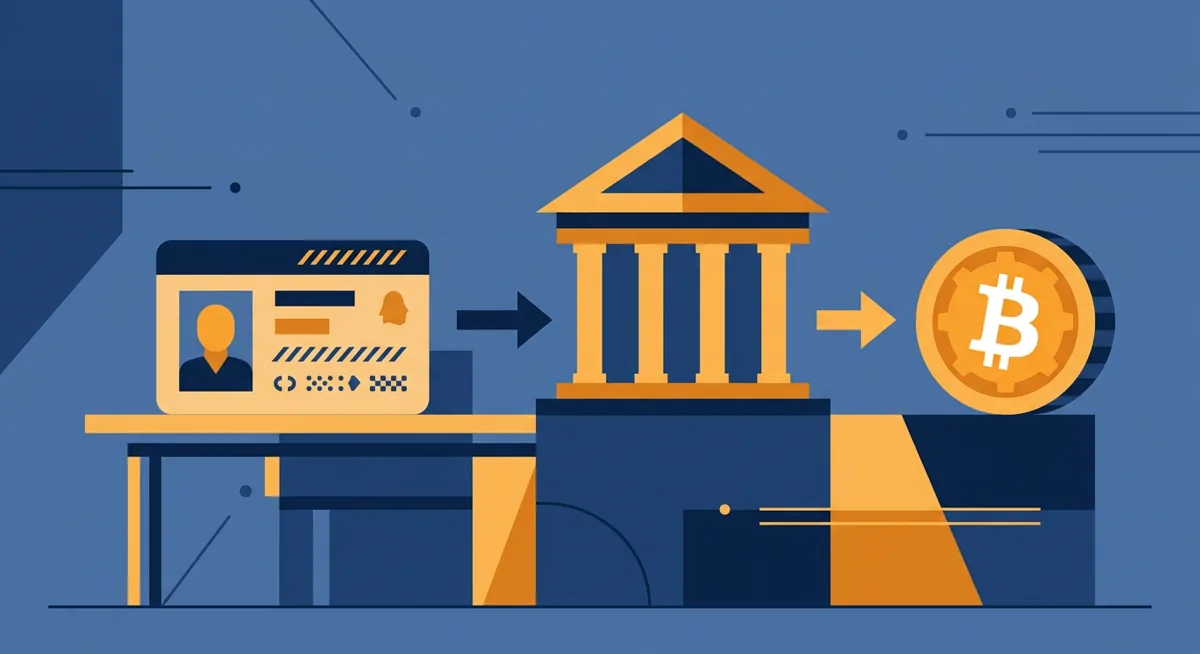
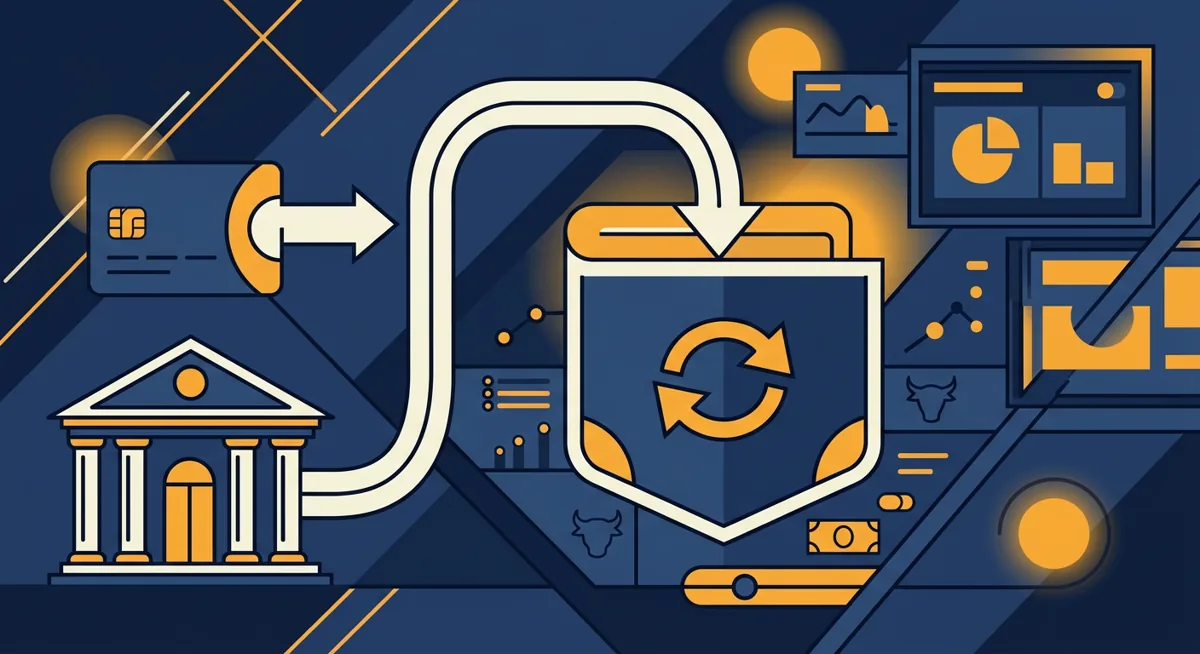
Fiat on-ramps use stablecoins as a middle step. You send a bank transfer or card payment, the on-ramp converts it to a stablecoin, and that stablecoin is what actually lands in your exchange balance or wallet. Some platforms let you buy other crypto directly with fiat, but under the hood the fiat often gets converted to a stablecoin first anyway. Knowing this matters because the stablecoin step is where an extra conversion spread, a network fee, or a delay can appear that isn't obvious from a headline 'buy with card' button.
Takeaway: stablecoins are the rail, not the destination.
USDC vs USDT: what actually differs for someone moving fiat
USDC is issued by Circle. USDT is issued by Tether. Both aim to track the dollar one-to-one and both are supported on most exchanges you'd use for a fiat on-ramp. The practical differences for a payments-minded reader are less about ideology and more about which rails each issuer supports for cashing in and out directly rather than through an exchange.
Circle accepts wire, SEPA, and banking network transfers as deposit methods for minting or redeeming USDC directly. That matters if you're a business or a frequent mover of larger sums who wants to skip an exchange middleman and deal with the issuer. Most individual users never touch this path; they buy USDC or USDT on an exchange like they'd buy any other asset, and the issuer-level deposit methods are irrelevant to them day to day.
Where this does matter: if an exchange delists or restricts one stablecoin, having a path to redeem directly with the issuer is a backstop. It's a small point, but it's the kind of thing that only shows up when something goes wrong, like a sudden restriction in a specific country.
Takeaway: for ordinary buying and moving, USDC and USDT behave the same on most exchanges; the issuer-level deposit path is a fallback, not a daily tool.
Bank transfers vs stablecoin transfers
Once money is inside the crypto system, you have two ways to move it between platforms or to a counterparty: a bank transfer (ACH, wire, SEPA) or a stablecoin transfer on a blockchain. They are not interchangeable in behavior.
| Bank transfer | Stablecoin transfer | |
|---|---|---|
| Settlement | Runs through the banking network and clearing houses | Runs on a blockchain, finality depends on the chain |
| Reversibility | Can sometimes be recalled or disputed through the bank | Generally final once confirmed on-chain |
| Cutoff times | Subject to banking hours and holidays | Available any time the chain is running |
| Who sees it | Your bank, the receiving bank, intermediaries | Visible on a public ledger, tied to wallet addresses |
| Typical use | Funding an account from your paycheck or savings | Moving value between exchanges, wallets, or across borders without re-entering banking rails |
Neither is inherently cheaper or faster. A same-currency bank transfer inside one country can beat a stablecoin transfer on cost. A cross-border stablecoin transfer can beat a wire on speed. It depends on the specific corridor and the specific exchange's fee schedule, which is why generic claims about stablecoins being cheaper don't hold up without checking the actual numbers on the platform you're using. For a sense of how fee structures differ between major exchanges, see Buy Crypto: Binance vs Coinbase vs Kraken Fees Compared.
Takeaway: choose the rail based on the specific route and the fee schedule in front of you, not a general rule about crypto being faster.
What you need before moving fiat through a stablecoin
- A verified account on an exchange or on-ramp that supports the stablecoin you want (USDC, USDT, or both).
- A funding method the platform accepts: bank transfer, card, or in some cases a direct issuer deposit. Circle, for instance, takes wire, SEPA, and banking network transfers if you're funding or redeeming USDC directly with the issuer rather than through an exchange.
- Clarity on which network the stablecoin will move on. The same stablecoin can exist on several blockchain networks, and sending to the wrong one can strand the funds.
- A destination that actually supports receiving that stablecoin on that network, whether that's another exchange, a self-custody wallet, or a business counterparty.
- An idea of how much you're moving, because tiered fees and daily or monthly limits change the math at different amounts.
Takeaway: match the stablecoin, the network, and the destination before you send anything.
Moving fiat into a stablecoin and onward
- Pick the on-ramp or exchange. Compare the ones you're considering using a fee and feature guide such as Buy Crypto: Binance vs Coinbase vs Kraken Fees Compared before committing.
- Finish verification. Most platforms require identity documents before you can fund an account at all, let alone move larger sums.
- Link a funding method: bank transfer, card, or a direct issuer channel if the platform offers one.
- Fund the account in fiat currency.
- Convert the fiat balance to the stablecoin you want, usually USDC or USDT, inside the platform's buy or convert screen.
- Confirm the destination network before withdrawing. If you're sending to another exchange or a wallet, check that platform's supported networks for that stablecoin.
- Send the transfer and wait for the confirmations the destination requires before counting it as arrived.
- Convert the stablecoin to another asset, or hold it, depending on what you were trying to do in the first place.
Takeaway: verification and network choice are the two steps most likely to stall the whole process.
What actually gets charged
Exact fees and limits are platform-specific and change often enough that quoting a number here would be stale by the time you read it. What's consistent across platforms is the structure:
| Fee type | When it applies |
|---|---|
| Funding fee | Charged when you move fiat in; a card usually costs more than a bank transfer |
| Conversion spread | Charged when fiat converts to a stablecoin, even if no flat fee is shown |
| Network fee | Charged when the stablecoin moves on-chain, paid in the chain's native asset or absorbed by the platform |
| Withdrawal fee | Charged when moving the stablecoin off the platform, separate from the network fee in some cases |
| Account limits | Daily, monthly, or lifetime caps tied to your verification tier |
If you're comparing specific platforms, check a dedicated fee breakdown rather than a marketing page. For exchanges with layered maker and taker structures, Exchanges & Order Types: What Actually Matters covers how fee tiers interact with order type, which also affects stablecoin conversions done through an order book instead of a simple buy button.
Takeaway: a headline 'zero fee' claim usually hides the cost in the conversion spread or the network fee, so check both before assuming a transfer is free.
Common problems and fixes
- Deposit isn't showing up. Bank transfers can take longer to post than the on-ramp's interface suggests, especially over a weekend or a bank holiday. Stablecoin deposits that don't appear are more often a network mismatch than a delay; confirm you sent on the network the receiving platform actually supports.
- Funds sent to the wrong network. This is usually unrecoverable without manual support intervention, and not every platform offers that. Double-check network selection before every stablecoin send, not just the first time.
- Bank rejects or flags the transfer. Some banks treat transfers to known exchange accounts as high-risk and block or delay them. A call to the bank, or switching to a different funding method, sometimes resolves it.
- Verification mismatch blocks a larger transfer. Name, address, or document details that don't exactly match your bank account can hold up a transfer even after you're 'verified' on the exchange. Fix the mismatch before attempting the transfer again rather than retrying the same request.
- Stablecoin value looks off by a small amount. Minor deviations from one dollar happen during periods of market stress and usually correct. A deviation that doesn't correct, or one on a stablecoin you don't recognize, is a different and more serious problem.
Takeaway: most stablecoin transfer failures are network or verification mismatches, not platform outages.
Where this fits into choosing a platform
If you're choosing between exchanges mainly to move fiat in and out through stablecoins, the decision looks less like 'which coin' and more like 'which rails does this platform support for my country and my bank.' A broad comparison across platforms, like Exchange Comparison Hub: How to Pick a Platform, is a better starting point than any single feature page. If you already know you're leaning toward a specific set of exchanges, platform-specific breakdowns help: KuCoin, Bybit, OKX, Bitstamp: Fees & Verification for that group, or How to Buy XRP on Binance: Fees, Limits, KYC if Binance is in the mix and you want to see how a stablecoin-funded account behaves when buying a non-stablecoin asset afterward.
If custody after the transfer is the open question, meaning what happens to the stablecoin once it lands, Kraken Wallet: Custody, Deposits, and Limits Explained walks through what an exchange-linked wallet actually controls versus what you control.
Takeaway: pick the on-ramp based on your country, your bank, and your preferred stablecoin's support there, then worry about which coin to trade.
Questions
What are stablecoins used for on a fiat on-ramp?
They act as the intermediate asset between your bank-held currency and other crypto, letting you hold value on an exchange without converting back to a bank dollar every time you move money.
Is USDC safer than USDT?
This guide doesn't rate reliability, since that requires ongoing reserve data not covered here. What differs practically is issuer-level deposit support, such as Circle accepting wire, SEPA, and banking network transfers for direct USDC transactions.
Do bank transfers or stablecoin transfers cost less?
It depends on the route and the platform's fee schedule. Neither is categorically cheaper, so check the specific fee breakdown for the corridor you're using before moving money.
What happens if I send a stablecoin to the wrong network?
The transfer usually can't be recovered without manual platform support, and not every platform offers that, so confirm the network before every send.
References
| # | Source | Reliability | Checked |
|---|---|---|---|
| 1 | circle.com — Deposit methods | Official source | 2026-09-25 |