Short answer: Exchange wallets are convenient, but they don’t offer self-custody, and the finer details regarding fees and limits vary enough to make a difference. Read on if you’re choosing between Bitget Wallet, Binance, or Kraken and want to learn about how they actually work, rather than just marketing promises.
In short
- Binance's spot maker fee at the base tier is 0.1%, while card purchases can run up to around up to around 2%.
- Binance is restricting access in a number of countries, including American Samoa, Canada, Cuba, Cyprus, Guam, Indonesia, India, Iran, Japan, North Korea, Northern Mariana Islands, Philippines, Puerto Rico, Russia, Singapore, Thailand, Ukraine (Crimea Region incl. Donetsk, Luhansk, Zaporizhzhia and Kherson as well as the Crimea Peninsula), United States Minor Outlying Islands, USA, Vietnam, Virgin Islands (U.S.), Malaysia, Netherlands, United Arab Emirates, United Kingdom..
- According to information on the website Countries/Regions where the Binance App is supported: El Salvador, the Binance app has been confirmed as supported in El Salvador, although the availability of other products may vary.
- The minimum deposit amounts on Binance vary depending on the currency and payment method, as indicated on the website Minimum deposit amounts vary by currency and method—there is no single fixed amount.
- This article includes only the facts that I have been able to verify; if there is no data available on Bitget Wallet or Kraken, I mention that explicitly rather than making assumptions.
Key facts
| Binance | |
|---|---|
| Fees | Spot maker fee (base tier): 0.1% Instant buy / card purchase fee: up to around 2% |
| Limits | Minimum deposit amounts vary by currency and method |
| Deposit methods | — |
| Country availability | Restricted countries: American Samoa, Canada, Cuba, Cyprus, Guam, Indonesia, India, Iran, Japan, North Korea, Northern Mariana Islands, Philippines, Puerto Rico, Russia, Singapore, Thailand, Ukraine (Crimea Region incl. Donetsk, Luhansk, Zaporizhzhia and Kherson as well as the Crimea Peninsula), United States Minor Outlying Islands, USA, Vietnam, Virgin Islands (U.S.), Malaysia, Netherlands, United Arab Emirates, United Kingdom. Supported countries: Countries/Regions where the Binance App is supported: El Salvador |
What these exchange wallets actually are
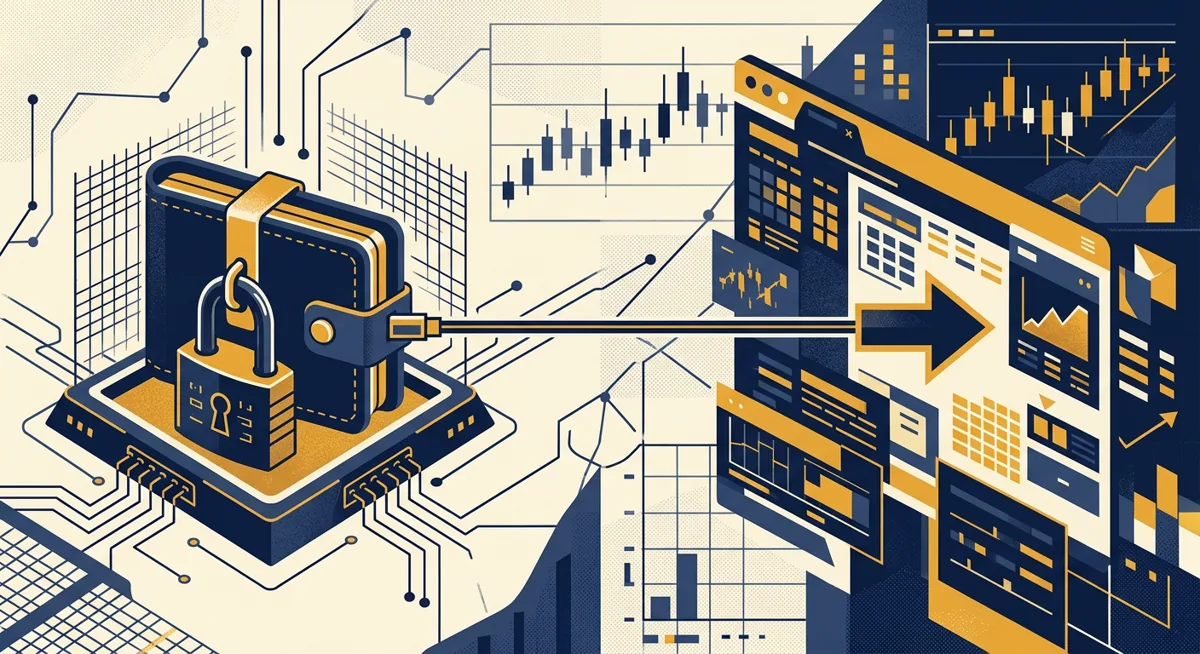
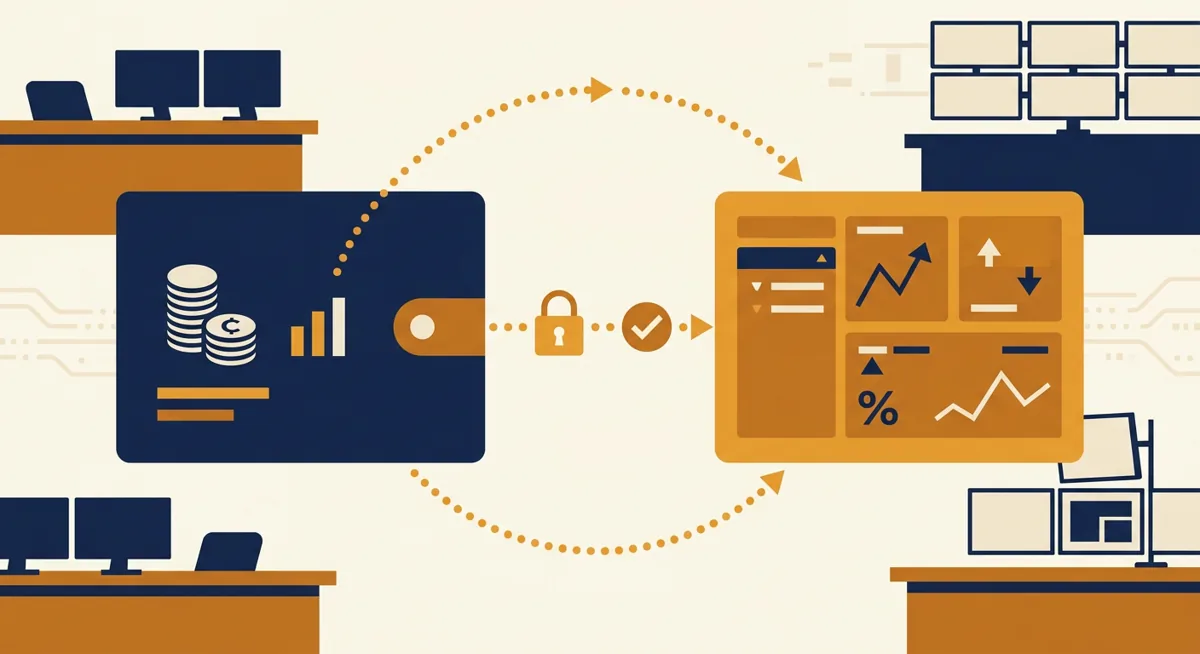
An exchange wallet is a balance stored in the platform’s own ledger. You do not control the private keys. Bitget Wallet blurs this line somewhat—it’s positioned as a standalone web-3 wallet that connects to decentralized applications, while the Bitget exchange still holds balances in custody for spot and trading accounts. Binance follows a more traditional model: a custodial balance for trading, plus the option to connect to external wallets if you want to transfer funds off the platform. Kraken has a structure similar to Binance’s in this regard.
Who it's for: Those who want to trade quickly, don't want to deal with managing seed phrases, and are willing to trust the platform's operational security. Who this isn’t for: those who prioritize full control over their keys—this is a matter of self-custody, not an exchange wallet. For a more detailed analysis of the differences between storage methods, see the article Cryptocurrency in Cold Wallets: Self-Custody vs. Exchange Storage.
Another difference worth noting: a wallet linked to an exchange is not the same thing as the exchange itself. If you’re not entirely clear on the difference between brokerage and exchange mechanisms, this is explained in detail in the article “What Is a Digital Broker? Broker vs. Exchange: An Explanation”].
Conclusion: Exchange wallets offer convenience in exchange for control—before you fund your account, decide which is more important to you.
Fee structure, with numbers only where I have them
I only have verified fee figures for Binance in this comparison. Here's what applies:
| Fee type | Binance |
|---|---|
| Spot maker fee (base tier) | 0.1% |
| Instant buy / card purchase | up to around 2% |
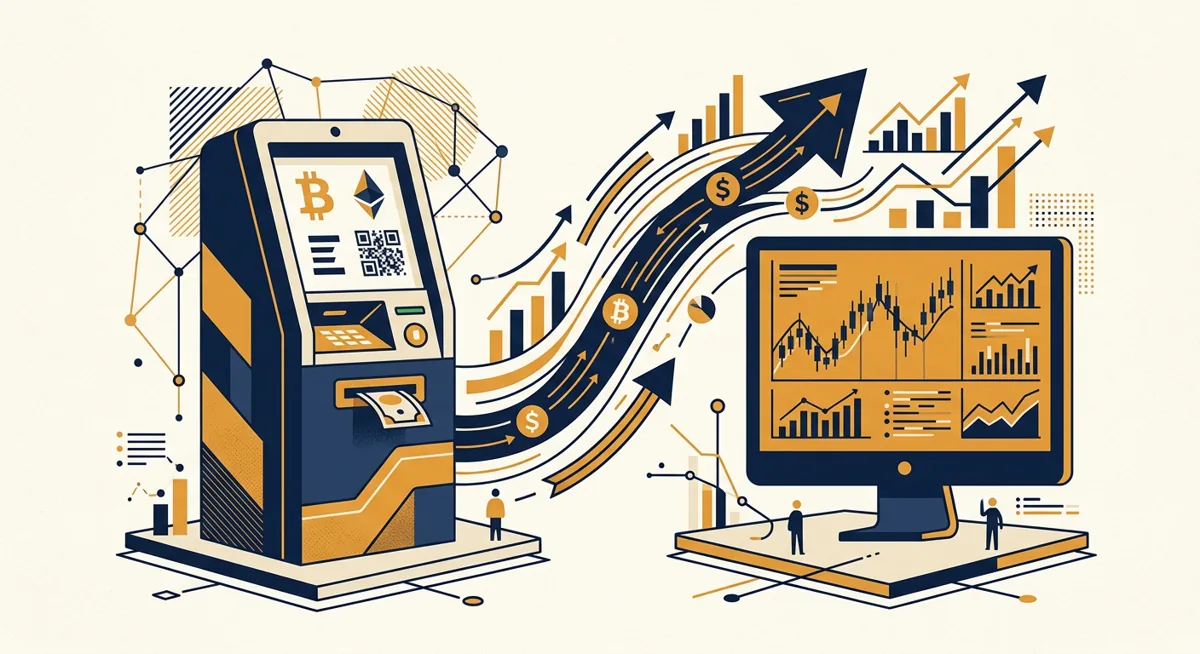
The gap between those two numbers is the whole story. Trading on the order book at base tier costs 0.1%. Paying with a card for instant conversion costs up to around up to around 2% — a markup that exists because card rails and instant settlement aren't free for the exchange, and they pass that along.
For Bitget Wallet and Kraken, I don't have fact-checked fee figures to cite here, so I won't guess at numbers. If you're specifically comparing Kraken's transfer mechanics, Move Crypto Between Wallets and Exchanges: Kraken walks through the process without inventing figures either.
Takeaway: on Binance, the cheapest route is the order book, not the instant-buy button — check the actual rate before you click.
Deposit and withdrawal limits, and how verification changes them
This is where custody and compliance intersect. Verification tiers on most exchanges unlock higher withdrawal ceilings and sometimes lower minimum deposit thresholds. For Binance specifically, the documented fact is this: minimum deposit amounts vary by currency and method — Minimum deposit amounts vary by currency and method. There isn't a flat number that applies across every asset, which means the number you see at deposit time is specific to that coin and that network, not a platform-wide constant.
I don't have comparable fact-checked limit figures for Bitget Wallet or Kraken to put in a table here, so I'm not going to invent them. What I can say generally, without citing numbers: higher verification tiers on custodial exchanges typically correlate with higher withdrawal ceilings, because the platform is complying with anti-money-laundering requirements tied to identity confidence. That's a structural pattern across the industry, not a Binance-specific fact.
If you're trying to understand how funds actually move between a custodial balance and an external wallet step by step, Move Crypto Between Wallets and Exchanges: Kraken is the more mechanical reference. And if your limit questions are really about reporting for tax season rather than daily caps, Crypto Taxes: Exporting Exchange Reports for Filing is the more relevant guide.
Takeaway: don't assume a withdrawal limit you read about one coin applies to another — check per-asset, per-method, every time.
Where this is actually usable
The issue of accessibility is something people often overlook, only to run into problems later. In the case of Binance, the following two facts have been noted:
- The countries subject to these restrictions include: American Samoa, Canada, Cuba, Cyprus, Guam, Indonesia, India, Iran, Japan, North Korea, Northern Mariana Islands, Philippines, Puerto Rico, Russia, Singapore, Thailand, Ukraine (Crimea Region incl. Donetsk, Luhansk, Zaporizhzhia and Kherson as well as the Crimea Peninsula), United States Minor Outlying Islands, USA, Vietnam, Virgin Islands (U.S.), Malaysia, Netherlands, United Arab Emirates, United Kingdom..
- According to information on the website Countries/Regions where the Binance App is supported: El Salvador, the Binance app is supported in El Salvador.
This list of restrictions is quite extensive and includes both complete bans and partial restrictions on products—in practice, this leads to the same result: check the requirements in your jurisdiction before you fund your account, not after.
As for Bitget Wallet and Kraken, I do not have confirmed data on availability at the country level that I could cite here, so I have deliberately chosen not to list countries for either of these platforms. Availability for both platforms changes periodically without prior notice, which is reason enough to check the platform’s current status page directly rather than relying on any articles, including this one.
Conclusion: Country restrictions are binary and non-negotiable—comparing features is irrelevant if your country isn't on the list.
Who this fits and who should look elsewhere
Fits: traders who want order-book access at 0.1% maker fees, who are comfortable with custodial balances, and whose country isn't on Binance's restricted list — notably not American Samoa, Canada, Cuba, Cyprus, Guam, Indonesia, India, Iran, Japan, North Korea, Northern Mariana Islands, Philippines, Puerto Rico, Russia, Singapore, Thailand, Ukraine (Crimea Region incl. Donetsk, Luhansk, Zaporizhzhia and Kherson as well as the Crimea Peninsula), United States Minor Outlying Islands, USA, Vietnam, Virgin Islands (U.S.), Malaysia, Netherlands, United Arab Emirates, United Kingdom..
Looks elsewhere: anyone in a restricted jurisdiction, anyone who needs card-based instant purchases and isn't willing to pay up to around up to around 2% for that convenience, and anyone who wants self-custody rather than a custodial balance regardless of which exchange brand is attached to the wallet.
For Bitget Wallet specifically, the self-custodial Web3 wallet layer is a different product category than the exchange's custodial balance — don't conflate the two when deciding what you're trusting with funds. If you're still mapping out the general custody-versus-broker landscape before picking a platform, Coinbase Wallet App vs Coinbase Exchange: Custody Explained and Buy Bitcoin on Coinbase: Fees, Limits, and Withdrawals cover the same distinction on a different platform, useful as a side-by-side mental model.
Takeaway: match the custody model to your actual need — trading speed, self-custody, or card convenience rarely all come from the same product.
Questions
Is Bitget Wallet the same as a Bitget exchange account?
No. Bitget Wallet functions as a separate Web3 wallet product for connecting to decentralized apps, while the exchange account holds custodial trading balances. They're related brands, not the same custody model.
What is Binance's cheapest way to buy crypto?
Based on the available data, trading on the order book at the base level incurs a commission for the “maker” of 0.1%, which is cheaper than instant purchases made with a bank card, which can cost as much as approximately up to around 2%.
Does verification level change withdrawal limits?
Generally speaking, yes, this is typical for all exchanges that hold user assets, although I don’t have specific, verified data for each platform. As for Binance, the minimum deposit amounts depend on the currency and payment method, rather than being set at a single fixed amount.
Is Binance available everywhere?
No. Binance restricts access in countries included on its official list, including the United States, the United Kingdom, Canada, and others; it has been separately confirmed that the Binance app is supported in El Salvador.
Should I use an exchange wallet or self-custody?
It depends on what matters more to you: the convenience of trading or control over your keys. This article does not provide specific recommendations; for more details on the mechanisms of each approach, see the comparison of storage services at the link provided.
References
| # | Source | Reliability | Checked |
|---|---|---|---|
| 1 | binancemakertakerfee.org — Spot maker fee (base tier) | Aggregator — less reliable | 2026-10-02 |
| 2 | binance.com — Instant buy / card purchase fee | Official source | 2026-09-30 |
| 3 | binance.com — Minimum deposit | Official source | 2026-09-16 |
| 4 | binance.com — Restricted countries | Official source | 2026-09-16 |
| 5 | binance.com — Supported countries | Official source | 2026-09-25 |